/ Conferences
APPEC 2025
8 September - 11 September | Singapore
/ Conferences

/ Conferences
8 September - 11 September | Singapore
/ Conferences

The oil and natural gas industry faces "unprecedented" and "uncertain times" with trade and tariff changes on an almost daily basis and goals to reduce carbon emissions facing the reality that nothing will work unless it’s economical, senior industry executives said at the 32nd annual Middle East Petroleum & Gas Conference in Bahrain’s capital Manama on May 26-28. With the country’s oil minister Mohamed bin Mubarak Bin Daina at the helm, Bapco Energies CEO Mark Thomas and S&P Global Commodity Insights Co-President Mark Eramo opened the conference. A successful energy transition depends on advancing traditional and renewable energy at the same time, Eramo told the conference. The Middle East continues to anchor global energy supply, policy and pricing, he noted. But energy must be affordable, with refineries and other downstream industries dependent on low costs to succeed. Carbon must be seen as an asset, not just a liability, the co-president noted. Developing countries are choosing energy security over speed of their energy transitions, with economic growth, affordability and energy access taking precedence over rapid decarbonization. One-size-fits-all approaches to transition are neither fair nor effective in a divided global energy economy, he noted. Natural gas is top of mind for energy transition in Saudi Arabia, where the fuel will "be a key beyond 2050," Musaab al-Mulla, VP of market analysis and sustainability for Saudi Aramco, told a panel. He noted gas has been important for the country since the 1970s when industries such as power generation were being developed. Moving to hydrogen will also be key, "but it's very expensive," he said. While Aramco is ready to produce fully-certified blue hydrogen, having worked with South Korea and Japan, "there are no offtakers because of the cost, but once a demand is triggered, the supply will be there from gas." A year ago, climate goals dominated agendas, energy security was gaining momentum and $60/b crude oil wasn’t part of the debate. "Today that number is back in the headlines," Bapco Energies’ Thomas said in his opening speech. With oil demand at a record high, solar and wind renewables gaining share in electricity generation, gas demand on the rise and coal demand at all-time highs largely due to rising power consumption, "we’re not experiencing a transition away from hydrocarbons. We’re in an energy addition cycle," Thomas said. Trade tensions, geopolitical conflicts, regulatory fragmentation and supply chain shocks are no longer temporary anomalies. They are persistent realities. And they are all converging in ways that challenge long-held assumptions," he said. Attendees were asked to "lean into the difficult questions. Balance ambition with realism and remember that the objective isn’t just to transition energy, but to advance it and to build affordable, cleaner and sustainable energy solutions. FGE Chairman Emeritus Fereidun Fesharaki brought out his famed Crystal Ball and warned that while OPEC+ may need to return to market management in 2026, the market now is digesting barrels being added after years of cuts. The Crystal Ball worries about 4Q 2025," he said in his presentation. In reference to Iran sanctions, the Crystal Ball expects increasing sanctions on ports, refineries and other physical assets. The existing refinery fleet will have to run harder to replace lost capacity and meet new demand, as the EU middle deficit widens. However, the second half of 2025 is still challenging as new capacity ramps up and China "lurks as an export threat. LNG demand is seen peaking much later than oil, perhaps not until the mid-2040s, he said. Sustainable aviation fuel means making an investment close to $2 billion, Linn Tonsberg, director of BP aviation for Middle East and Africa, said. While mandates would create the demand, "there needs to be that certainty in the longer term as it pertains to the supply side in order to ensure that you can make these type of stand-alone investments. Trade discrepancies or trade imbalances from wars and sanctions have "always existed but probably they’re at a peak point right now," Tom Baker, managing director at Vitol Bahrain, said. More than 150 million barrels of oil on the water are taking different routes or going to different destinations than a decade ago, due to wars and sanctions, he said. "A lot of oil that would naturally flow into Europe is going to Africa, South America, Far East. This alone is maybe contributing 40 to 50 million barrels in excess flows." Shipping attacks in the Red Sea have contributed 30 million to 40 million barrels, he added. "That is calming down a little bit. We’re seeing more flows going through the Red Sea." But no matter what the challenge, "the markets have been very efficient at creating solutions," Baker said. "Yes, there are longer routing miles, but solutions came up in terms of different shipping alternatives, different insurance, different financing. It's created a whole different industry alongside maybe what you call the traditional trading industry. And the market -- the barrels are finding their way to market."

Ahead of the Middle East Petroleum Gas Conference (MPGC 2025), David Bird, CEO of OQ8, joins Daniel Evans of SP Global Commodity Insights for an exclusive discussion on the evolving refinery landscape in the Middle East.They explore key topics, including shifting fuel oil demand centers, the role of new versus older refineries, and strategies for integrating renewables. The conversation highlights the increasing reliability, infrastructure advancements, and operational efficiencies of modern Middle Eastern refineries, reinforcing the region’s appeal as a significant place for energy investment. Join David and other industry experts from May 26-26 in Bahrain to gain valuable insights and strategic perspectives for navigating the refining landscape. Don’t miss this opportunity to stay ahead and connect with key market players! Register now: https://commodityinsights.spglobal.com/MPGC.html

Oil market delegates attending the Asia Pacific Petroleum Conference -- or APPEC 2024 -- will be seeking insights on whether mounting geopolitical turbulence and OPEC+ strategy to extend production cuts can overshadow a slowdown in demand and support prices.Additionally, the evolving landscape of global oil trading and the outlook for consumption of transportation fuels amid rising electric vehicle use will be some other topics of focus at APPEC, scheduled in Singapore over Sept. 9-12."There are multiple themes for APPEC, ranging from energy transition, decarbonization strategies, market trends and price outlooks, technological innovation, sustainable practices, as well as geopolitical influence on global energy markets," Kang Wu, global head of oil demand research at S&P Global Commodity Insights, said.For the oil markets, one of the key themes for this year's delegates will be how the oil demand and supply outlook might shape up in the near future.According to Commodity Insights, OPEC and its allies' decision Sept. 5 to extend its voluntary production cuts for two months until the end of November is seen as neutral for Brent crude prices from current levels, but short-term fundamentals remain bearish. They expect October to see a crude stock build, regardless, as refinery maintenance will cut October runs by at least 1.6 million b/d from August.The planned 190,000 b/d hike for October is now set to be a 189,000 b/d hike for December. Likewise, the additional 173,000 b/d hike for November is now set to be a sequential 207,000 b/d increase for January.The removal of these barrels from fourth-quarter balances is only a minor offset to an expected fall in refinery demand over that period. Global crude stocks will still rise.Weak refining marginsAlthough ongoing geopolitical tensions in the Middle East and OPEC+ production cuts have hardly caused feedstock supply shortfalls in Asia, refiners are now focusing on weak crack spreads and refining margins, as well as fragile oil demand, feedstock managers and middle distillate traders said."What [the] Asian refining industry is mostly worried about is high shipping insurance premiums and crude oil logistical costs eating into overall refining margins," a feedstock management source at Japan's Cosmo Oil said.Broader economic activity across major East Asian economies remains sluggish, with gasoil and petrochemical demand continuing to lag amid quiet manufacturing and construction sectors, as well as weak goods and services exports, according to middle distillate marketers and analysts.Platts, part of S&P Global Commodity Insights, assessed the second-month Singapore gasoil swap crack against Dubai crude swaps at an average of $16.77/b so far in third-quarter 2024, up from $16.53/b in Q2 but sharply below the average $22.12/b in Q1 and the 2023 average of $22.82/b.Chinese refineries' crude throughput extended a downtrend in July, falling 2% from June to a 21-month low of 13.96 million b/d, reflecting a cooling demand in Asia's biggest oil consumer after the country's gross domestic product growth slowed to 4.7% in Q2 2024.Elsewhere, Japan's real GDP growth forecast for 2024 was revised down in the July update to 0.1% from 0.5%, while Asia's fourth biggest economy South Korea saw its July industrial production undershoot expectations, falling 3.7% month on month.Demand outlookA soft response to stimulus measures, delays to petrochemicals projects, and cool and wet weather are all dampening the Chinese demand. Electrification of transportation and a troubled property market are also hitting consumption. Therefore, the country's oil demand growth would likely stay in a low gear in the near future.APPEC delegates will also be keeping a close eye on the outlook for jet fuel demand and when the market would recover fully to pre-pandemic levels.Asia's jet fuel appetite surged 430,000 b/d on the year in first-half 2024 as the region saw the sharpest rise in air travel, but signs are emerging that the demand growth may taper off in H2 as aviation demand normalizes after the pandemic.Asia's jet fuel demand growth is expected to be around 270,000 b/d in H2, which would eventually pull down the annual rate of demand growth in 2024 below 2023 levels, according to Commodity Insights.Asian jet demand growth will moderate to 361,000 b/d in 2024 from 620,000 b/d in 2023, before further easing to 190,000 b/d in 2025 due to the fading impact of aviation demand normalization, according to Commodity Insights. Regional jet fuel demand will recover to 99.5% of the 2019 level by 2025.

Benjamin Tang, Director, Head of Liquid Bulk, S&P Global Commodity Insights speaks with Peter Kolding, VP Commercial of Hafnia and Capt. Pallava Shukla, Director of Health, Safety, Security and Environment (HSSE) and Decarbonisation of AET, on the tanker turbulence and fleet planning towards decarbonization in mitigating environmental impact. Join us at the upcoming 40th Annual APPEC conference taking place on September 9 - 12, 2024. Discover the latest trends, challenges, and opportunities shaping the global energy landscape. Uncover more on the shipping and bunker markets, and engage with industry leaders, policymakers and innovators on Day 3, in our Shipping & Bunker Conference on Sep 11. Register today.
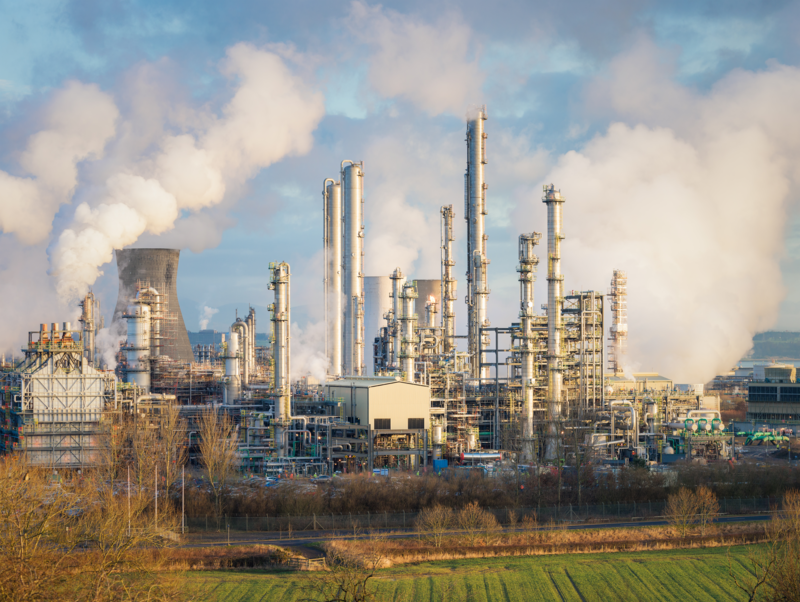
Global upstream oil and gas investment growth is expected to slow in 2024, driven primarily by Middle Eastern and Asian NOCs, but remains at levels well above that needed for governments to hit key climate targets in full and on time by 2030, the International Energy Agency said June 6.Global upstream spreading is expected to rise by 7% to reach $570 billion this year, following a 9% increase seen in 2023, the IEA said in its World Energy Investment 2024 report. Cost efficiency improvements have helped contain upstream spending which now stands at 30% below the 2015 peak, the IEA said.At the same time, however, global spending on clean energy such as renewable power and energy efficiency is now almost twice the levels of those on fossil fuels, the IEA said.While investment in clean energy is growing fast, the report finds that oil and gas spending this year is broadly aligned with oil demand levels implied in 2030 by today's policy settings under the IEA base-case STEPS scenario, which shows coal, oil and natural gas demand leveling off or declining before 2030.Measured against its central Announced Pledges Scenario, however, the IEA said upstream spending is on pace to be around 35% higher than needed for national climate goals to be achieved by 2030. Global upstream spending is also more and more than double the 2030 levels needed if oil consumption falls in line with Paris Agreement targets to contain global warming, the IEA said.As a result, the IEA reiterated its call that no further developing spending on long-lead-time oil and gas projects is needed to meet global demand in the coming decades."The trajectory for oil and gas consumption is curbed by rapid growth in renewables, efficiency, and other clean energy sources. There is no need in this scenario for further oil and gas exploration, as already-discovered fields are sufficient to cover projected demand," the IEA said in the report.Total energy investment worldwide is expected to exceed $3 trillion in 2024 for the first time, the IEA estimates, with some $2 trillion set to go toward clean technologies – including renewables, electric vehicles, nuclear power, grids, storage, low-emissions fuels, efficiency improvements and heat pumps.Peak demand The IEA's latest energy investment report comes amid a growing divergence in long-term demand outlooks by key forecasters due to uncertainty over the ramp-up and affordability of clean energy sources.The IEA predicts that demand for gas, oil and coal will peak by 2030, with road transport no longer a source of oil demand growth by the end of the decade. Under its central APS scenario, the IEA expects global oil demand to average around 97.5 million b/d in 2030.According to S&P Global's reference case scenario, global oil and biofuel demand will peak at around 111 million b/d in 2031 while OPEC expects global oil demand to reach 110.2 million b/d in 2028.The IEA report also comes a day after a similar investment report which concluded that spending on oil and gas projects worldwide must rise by almost a quarter to $738 billion from next year to meet rising hydrocarbons demand and prevent a supply crunch by 2030.According to the "Upstream Oil and Gas Investment Outlook" carried out by the International Energy Forum and S&P Global Commodity Insights, just over $600 billion will be spent on upstream projects to boost or maintain oil and gas output in 2024, the highest figure for a decade.Analysts at S&P Global Commodity Insights estimate that global oil demand -- including biofuels -- will remain at around 31% of the global energy mix through 2030, while renewable energy sources will grow 6%-8% per year to make up 13% of total energy demand at the end of the decade, up from 8% in 2022.Refining sector In the downstream sector, the IEA said it expects spending on oil refineries to decline globally by 5% in 2024, following a similar trend in 2023 where investment was just under $37 billion. Around 800,000 b/d of new refining capacity is set to come online in 2024, the IEA estimates, with future investments likely to continue to be concentrated in China, India, and the Middle East due to competitive operating costs and stronger demand growth.With a rising disconnect between long-term climate change targets and measured global emissions, many refiners are increasingly opting to rationalize capacity or shift to low-carbon feedstock processing."Uncertainties around future demand growth present significant challenges for new investments in the refining sector," the report notes.Clean energy investments by oil and gas companies themselves reached $30 billion in 2023, accounting for only 4% of the industry's overall capital spending in 2023, according to the report. Meanwhile, coal investment continues to rise, with more than 50 gigawatts of unabated coal-fired power approved in 2023, the highest since 2015.Clean spending by oil and gas companies in 2023 was a 30% increase from 2022 levels but well below the 65% jump seen from 2021 to 2022, reflecting in part the inflationary environment and supply chain issues for some renewable projects, the IEA said.

The global energy industry has to ensure that investments to the oil industry continues to flow despite a changing landscape, and any big shift in focus could potentially act as a stumbling block for energy security as well as create a volatile market, OPEC Secretary General Haitham al-Ghais said."We need to reiterate that the misguided notion of no longer investing in new oil projects would undermine the security of energy supplies and lead to major volatility," he told the India Energy Week Conference in Goa.Global oil demand growth is forecast to far outpace the expected rise in non-OPEC supply over the next two years, OPEC said on Jan. 17, as the producer group charts its course to manage the market ahead. In its closely watched monthly oil market report, OPEC estimated the world's thirst for oil to increase 2.25 million b/d in 2024 and another 1.8 million b/d in 2025.Ghais said the twin focus of the Indian government to pursue both fossil fuel growth as well as renewables is the right path to adopt."The Indian government has said consistently that the future will require all forms of energy, which is a message that OPEC fully supports," Ghais said.Strategic partnership Given India's future energy needs for its expanding and aspirational population and the fact that OPEC member countries provide approximately 60% of India's total crude oil imports, this strategic relationship would continue to be vital in the years and decades ahead, Ghais said."India will play a vital role in the future of the industry. According to our forecasts, oil demand in India is set to rise from 5.1 million b/d in 2022 to 11.7 million b/d by 2045. It will be the country with the largest oil demand growth over this period," he added.Commenting on the evolving global energy industry, he said it has never been more important to work together and adopt a holistic, practical and inclusionary approach as the world concentrates on the task of providing energy security for all while reducing emissions."We continue to be aligned by the need for every nation and people to have their energy transition pathways. It is not a uniform energy transition for all. There are multiple pathways to take. There is no one-size-fits-all solution to a sustainable energy future," Ghais said."No single source of energy will be able to fuel the global energy demand," he added.
In the final episode of the Oil Markets podcast for 2023, SP Global Commodity Insights crude and refined products directors Joel Hanley and Richard Swann round up the biggest events and trends of the year. They provide an across-the-barrel retrospective of the year in oil markets, including shifting trade flows, developing markets for Russian oil, the emergence of Guyana as a crude powerhouse and a landmark year for established benchmarks Dated Brent and Dubai.Related prices:ULSD DAP South Brazil (All-Origin) AULDA00Payara Gold FOB Guyana AYARA00Dated Brent PCAAS00Dubai Mo1 PCAAT00Further reading: Guyana calls for UN sanctions on Venezuela over disputed territoryMidland's successful inclusion into Platts Dated BrentMore listening options:

While 2023 was seen as a banner year for clean energy capacity in global power generation, the path forward to net zero will be fraught with complications and require different strategies as oil and gas remain a substantial part of the energy mix, according to S&P Global Commodity Insights analysts."When we're thinking about the transition and how to characterize it, the word we've been using quite a lot this year is multidimensional energy transition," said Roger Diwan, S&P Global's head of global energy finance, speaking at the SPGI Excellence in Energy Conference held Dec. 6. The description is apt because the energy transition is "moving in different places in different directions at different speeds, and it's very difficult to characterize it as one movement in any direction," he added.While the energy transition focus remains firmly on producing clean electricity primarily from wind and solar power, this has created a split screen view, particularly for oil and gas producers and refiners as they look to integrate clean energy into their markets and operations. "What we're looking at here is a really different kind of energy sector proposal, it's very focused in everything we can electrify," said Peter Gardett, S&P Global’s executive director of research.Oil demand growth to peak in 2030Decarbonization is key for fossil fuel producers and refiners to meet emissions goals, especially since the fossil fuel sector has proved more durable than once anticipated.Currently, oil, natural gas and coal meet 80% of total energy demand. Stripping out coal, oil and natural gas meets 54% of total energy demand, according to S&P Global forecasts."While, yes, it loses market share over the next 30 years out to 2050, it only drops to…48%," said Daniel Pratt, vice president of upstream solutions at S&P Global."You've got to remember that demand is going to continue to grow over the next 30 years. So even though it's losing market share to the renewable sector, you might still need more oil and gas in 2050 than we're actually producing today because of the overall demand growth," he said.Coal would take the "lion’s share" of the demand loss, followed by natural gas, he said.Many countries "are looking at gas as that transition fuel for electrification, decarbonization because it's affordable, is sustainable, reliable," he said.However, oil demand is expected to continue to rise and peak around 2030, which is "just over the horizon", said Kurt Barrow, head of oil markets at S&P Global."We’ve got the split screen analogy. We’ve got demand growth of 1.5 million b/d. Next year we will 2 million b/d," he said."And if you are going to talk about the energy transition in oil, you are really talking about an energy transition of the four big transportation sectors, that make up the majority of oil demand – such as cars, trucks, ships and planes," he added.Electron generation vs molecule managementDespite driving more vehicles on the road, there is less carbon being used as new, and more efficient cars, trucks and ships are being produced, according to S&P Global.The rise of electric vehicles, particularly in Europe, has played a role in lowering carbon, with 1 in 4 cars in Europe and 1 in 3 cars in China being sold currently, due in part to government policies.Geography also plays a role in an oil company’s carbon strategy and capital investment policy. European oil and gas majors spend more on low carbon initiatives than US-based majors like ExxonMobil and Chevron.Currently, Equinor, BP, Shell, Total and ENI spend about 15% to 20% of total company capital expenditures on low-carbon initiatives, according to the panelists.ExxonMobil and Chevron, both of which recently have made major acquisitions in Permian Basin oil and gas production, spend about 5%.This is expected to rise to about 15% to 20% by 2027, while their European peers expect to increase spending to "20%, 30% even 40%," said Pratt, adding that, in contrast with their US peers, the European companies are making substantial amount of investment in renewable "electron generation."Conversely, ExxonMobil and Chevron are more focused on investing in "molecule management", which tends to focus more on decarbonization of liquid fuels.Pratt said the diverging energy transition investment strategies comes down the stakeholders. "If you look at Europe, they very much see energy transition as their path to energy security," said Pratt."It's not like that in other parts of the world. In the US, we've achieved energy security through hydrocarbons," he added."So the drivers for the European [energy majors] are much more toward renewable transition," he said.

Listen now as Mish'al Alotaibi, Director, Safaniya Offshore Producing Department discusses Saudi Aramco's nominations for the Global Energy Awards Energy Transition - Upstream Finalist award! For a quarter century, we have been honored to recognize the energy sector’s exponential growth and rapid progress. As the world comes together to tackle climate change issues at COP28, we are gathering the industry to acknowledge the companies and individuals working on the crucial, innovative, practicable solutions that will solve those problems. Shine a spotlight on your organization’s accomplishments and join us this December 7th in New York City, USA to celebrate the many achievements and successes of the global energy community. Learn more now
MARCH | Houston, TX
Established in 1985, the World Petrochemical Conference is the premier assembly of industry leaders, global experts and government officials convening for thought-provoking dialogue and in-depth discussions around the major strategic issues facing all…