/ Conferences
World Petrochemical Conference
Houston, USA | March 23-27, 2026
/ Conferences
/ Conferences
Houston, USA | March 23-27, 2026
/ Conferences
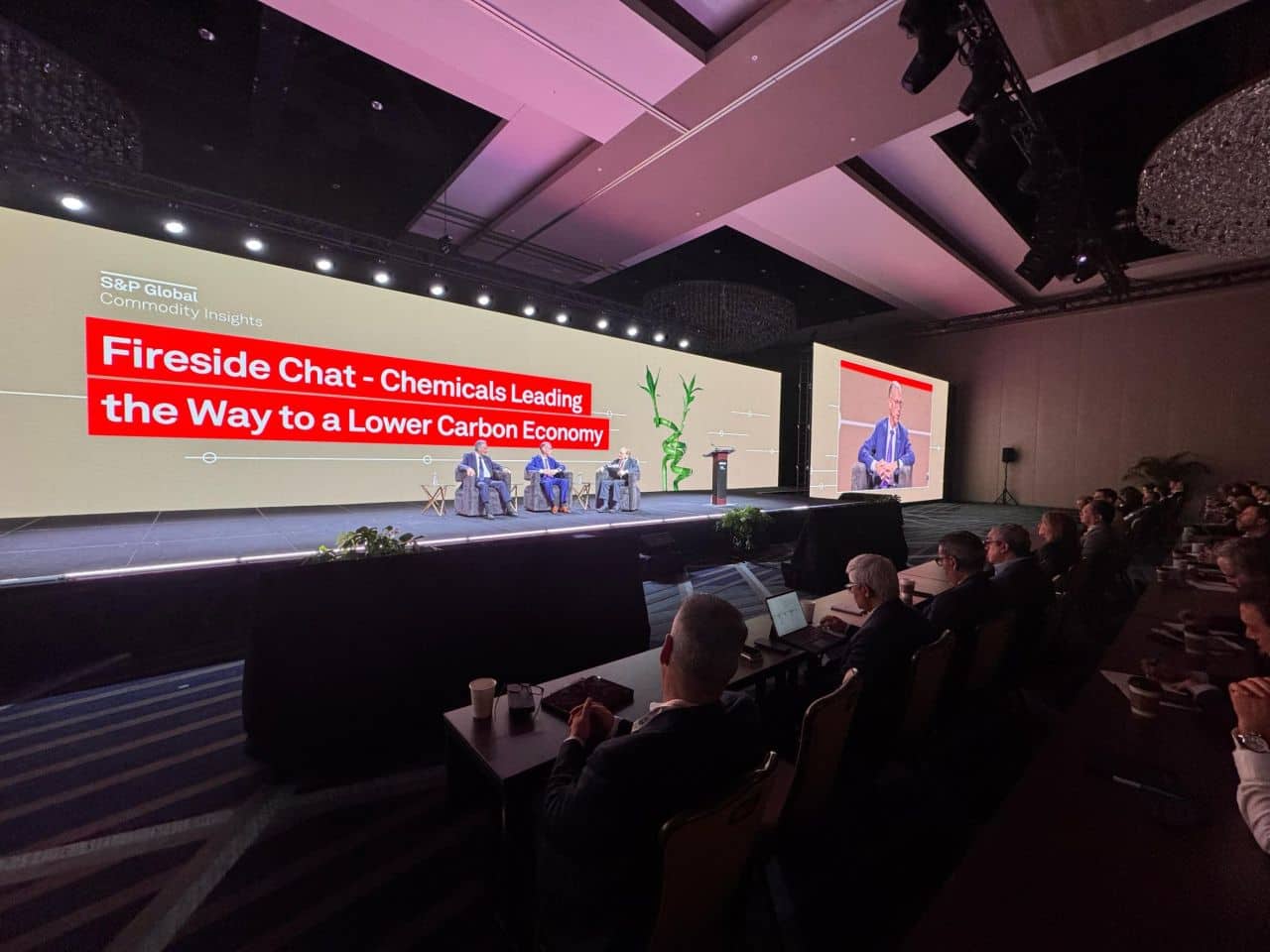
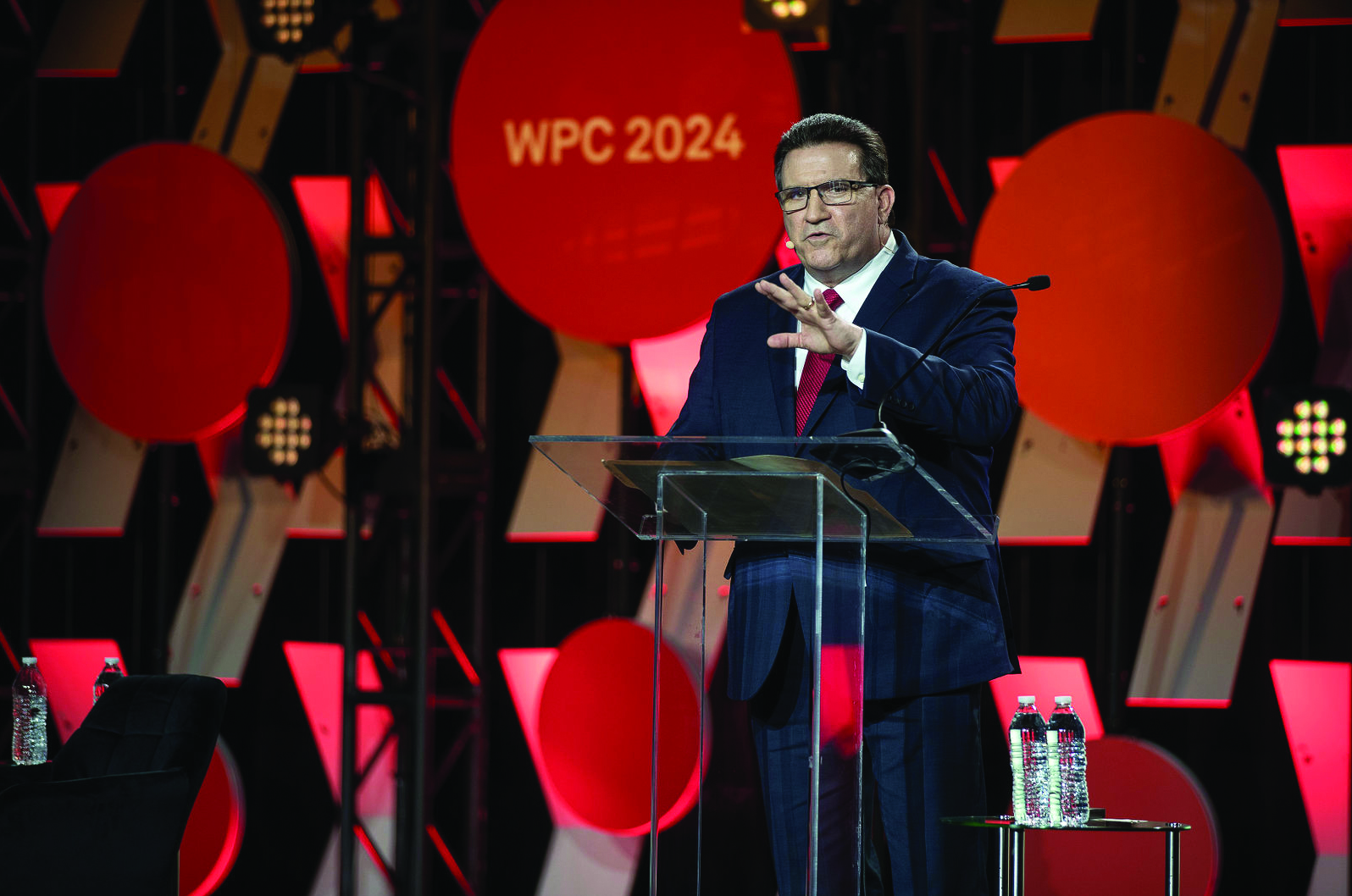
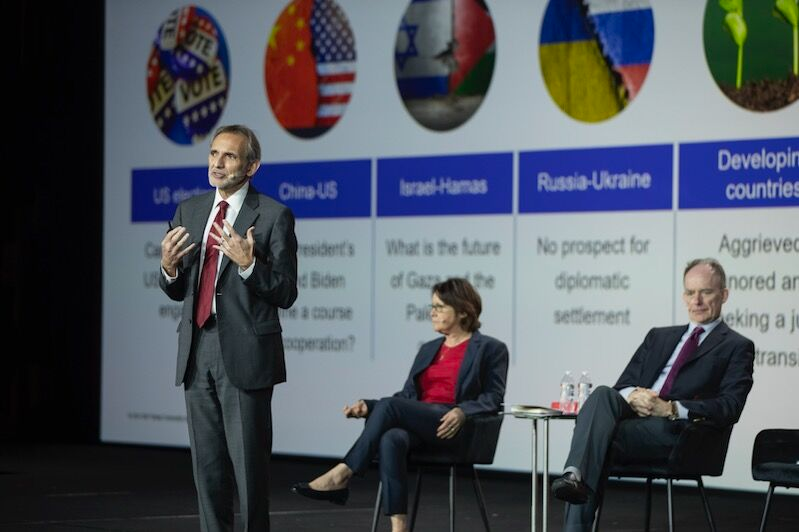
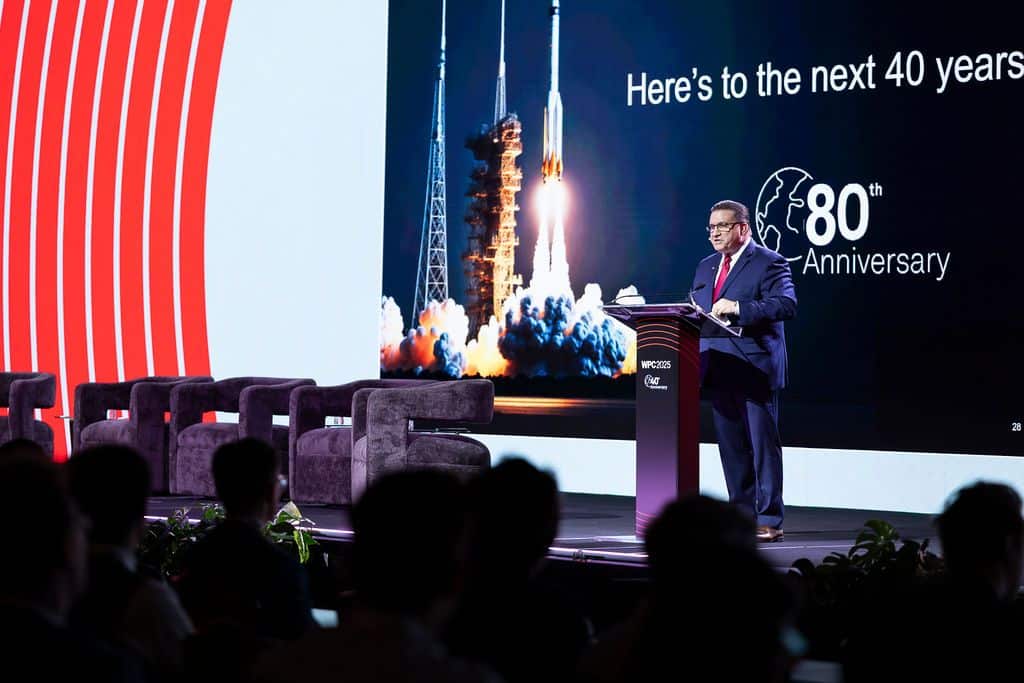
By Rob Westervelt, Chemical Week The global chemical industry faces market challenges through at least 2026 as it works through significant overcapacity, particularly from China’s massive capacity expansion, according to senior industry executives speaking at the 40th World Petrochemical Conference (WPC) in Houston March 17-21."How long it takes to work off the oversupply is a major topic of discussion," said Mark Eramo, co-president of S&P Global Commodity Insights in an interview at the conference. "It could be end of ‘26, early ‘27 before we really start to come out of it, and it’s going to take both idling and maybe shutting down capacity and sustained continued growth of the global economy to get us out of this."The current downturn represents one of the longest troughs in decades, according to Dow Chairman and CEO Jim Fitterling."A typical trough would last 24 months; three years is a relatively long trough," Fitterling said in an interview. "We’ve only had four periods where we’ve had this long a trough since the 1970s. The driver of weakness here is sustained below-3% global GDP."Market divergenceFitterling noted a two-speed economy, with some sectors showing resilience while others face significant headwinds."The services sector, electronics, semiconductors, and things related to the power and utilities industry are doing well. Even automotive is still holding up relatively well," Fitterling noted. However, housing-related demand remains weak across most global regions due to high interest rates and inflation.European producers face particularly acute challenges due to high energy costs stemming from the Russia-Ukraine war and the push toward higher-cost green energy alternatives. The combination of high crude oil prices, naphtha-based production costs and elevated energy expenses has pushed European producers to the high end of the global cost curve."Europe is challenged, and maybe I’m being kind there," Eramo said. "The energy structure in Europe has left its downstream industries, refining and chemicals, in a noncompetitive position. And that’s dangerous to be in a market that is oversupplied."Geopolitical headwindsRising geopolitical tensions have broadened uncertainties that chemical producers must consider when evaluating investments, according to conference speakers."The one way that others know they can hurt the United States, as a result of the experience we had with the pandemic, [is] the disruption of supply chains," said Carlos Pascual, senior vice president of geopolitics and international affairs at S&P Global.Ilham Kadri, CEO of Syensqo SA, emphasized that uncertainty impedes business planning. "What’s more difficult to handle is the stop-and-go. ... This is where the market gets a bit anxious, not knowing where to go and what the next thing will be."As supply chain logistics form a greater part of chemical companies’ strategic planning, "right-shoring" strategies should take the place of nearshoring or farshoring, Bob Patel, former CEO of LyondellBasell and W.R. Grace, said in a panel discussion March 18.While shifting geopolitics and tariff threats have made nearshoring to an extent "inevitable," said Peter Huntsman, CEO of Huntsman, during the same panel discussion, others on the panel noted that in an industry with long and complex value chains, placing the right elements of logistics in the right place requires better strategic thinking.Adaptability is keyThis approach requires flexible supply chains that can swiftly respond to fluctuations in demand and unforeseen challenges.However, Patel added that transitioning from current export-oriented dynamics in China, for example, remains a challenge for the chemical industry."The chemical industry continues to create opportunities and adapt during disruptive periods," Huntsman said.Despite the challenges, some companies are pushing ahead with major projects, which benefit from cost advantages. ChevronPhillips Chemical said its planned new crackers in the US and Qatar are set to start up next year."2025 is looking a lot like the last year, which would say that you have demand growth, especially in the US, but a tough margin environment, and [it is] tough to get the types of returns you’re looking for," said Steve Prusak, CEO of CPChem in an interview.Looking ahead, industry leaders see potential growth opportunities in emerging markets, though timing remains uncertain. "Africa will certainly be prominent in the next 40 years," said Patel. "But in the next five years? It is difficult to tell." For the latest news about the chemical industry, visit chemweek.com
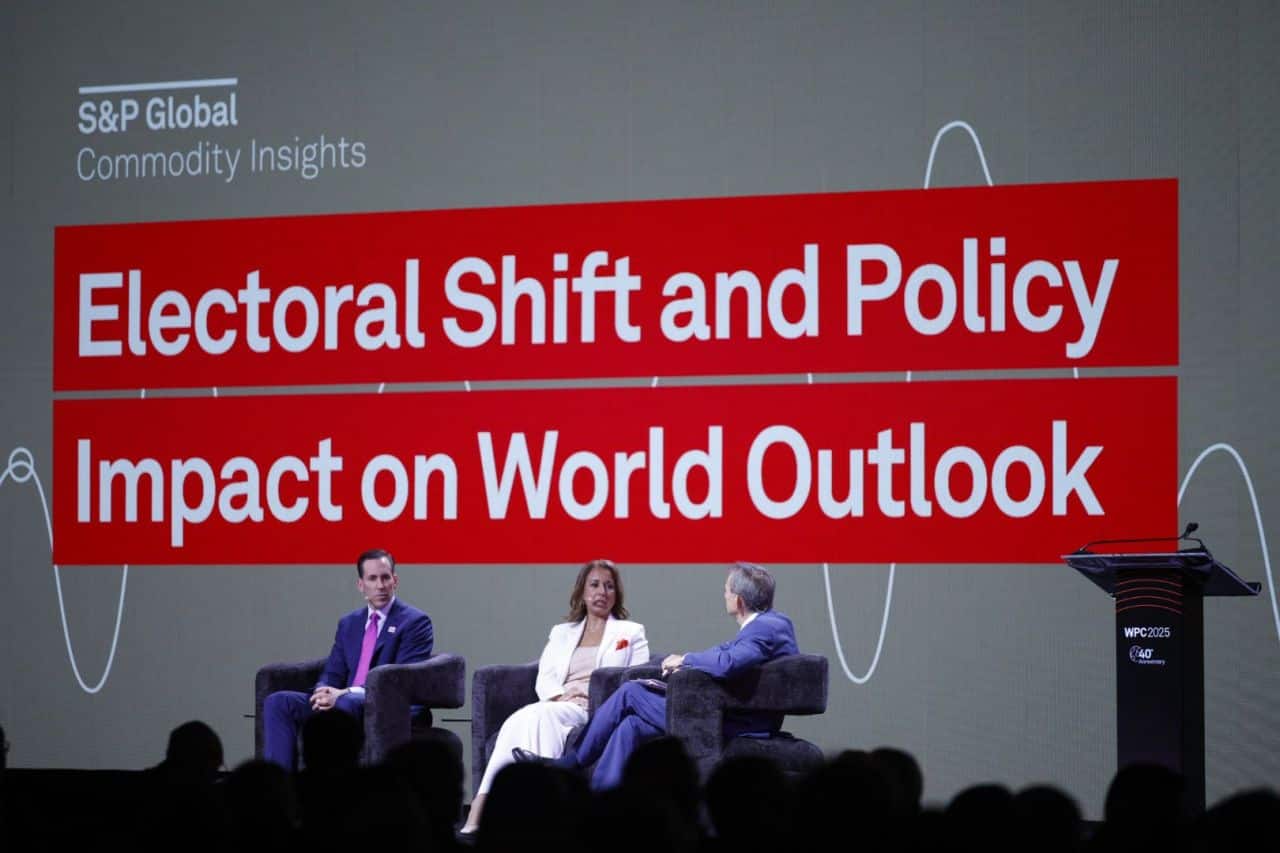
Key industry players joined Rob Westervelt at WPC 2025 to discuss the industry's outlook, key strategic trends, and strategies for navigating market, trade and policy uncertainties. Watch all the discussions on Chemweek LIVE and save the date for the 2026 World Petrochemical Conference March 23-27 in Houston!
CW Live welcomes Chevron Phillips Chemical CEO Steven Prusak who shares his perspective on how CP Chem's views on the 2025 outlook for olefins, polymers, and aromatics markets. Prusak also provides an update on CP Chem's petrochemical complex joint ventures under construction in the U.S. and Qatar with Qatar Energy, and shares his views on how industry continues to evolve in today's competitive landscape.Join us at 𝗪𝗣𝗖 𝟮𝟬𝟮𝟱 as leading executives come together to share their insights on emerging trends, challenges, and the evolving landscape of the sector. This is your chance to gain invaluable knowledge from the very best and network with top industry professionals! Date: March 17 - 21, 2025 Location: Houston, TX (Marriott Marquis) Register nowDon't miss out on the industry's premier, must-attend event!
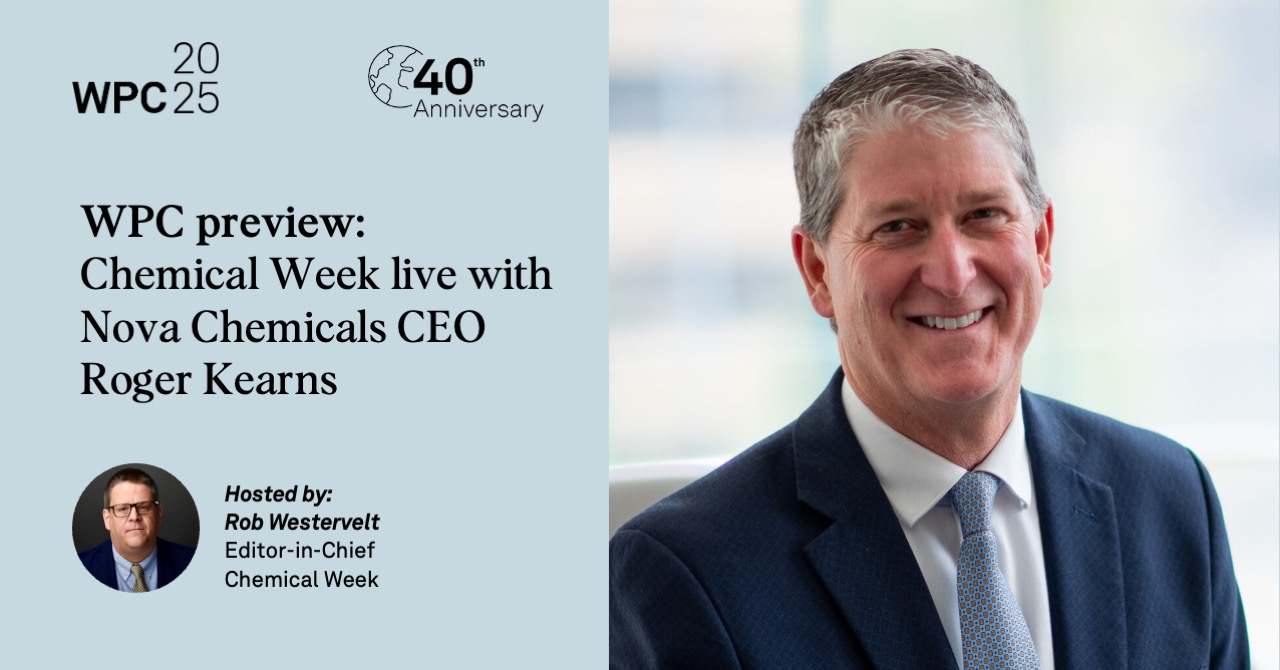
Chemical Week editor Rob Westervelt sits down with Roger Kearns, President and CEO of Nova Chemicals, to discuss the outlook for polyethylene and ethylene, Nova's investments in circularity, and how the industry has evolved over his career as we gear up for the 40th World Petrochemical Conference in Houston from March 17-21, 2025.Join us at 𝗪𝗣𝗖 𝟮𝟬𝟮𝟱 as leading executives come together to share their insights on emerging trends, challenges, and the evolving landscape of the sector. This is your chance to gain invaluable knowledge from the very best and network with top industry professionals! Date: March 17 - 21, 2025 Location: Houston, TX (Marriott Marquis) Register nowDon't miss out on the industry's premier, must-attend event!
The Asia Gas Markets Conference 2024 was held in the commodities trading hub of Singapore in October in the thick of action for the LNG industry as delegates discussed wide ranging topics from decarbonization to the shadow fleet evading Russian LNG sanctions. Ongoing tensions in the Middle East have raised new concerns about energy security and these geopolitical pressures have injected significant price uncertainty into the market, Senior Minister of State, Low Yen Ling told delegates. "LNG markets are also expected to remain tight towards the end of 2024 due to forecasts of a colder winter," she said in her keynote speech. "Natural gas will remain vital to countries' energy portfolios until we find an alternative low-carbon and cost-competitive energy source with an equally robust global supply chain." The conference was held in the backdrop of the Singapore government announcing the expansion of its onshore LNG terminal with a new FSRU based facility that will add 5 million mt/year or about 50% of existing regasification capacity, to meet power generation needs. Singapore announced its new state-backed centralized gas company Gasco will start procuring gas for the power sector from 2026 and bring about greater diversification of supply and economies of scale. The government also unveiled one of the world’s first state-backed initiatives to implement carbon capture for gas-based power plants during the combustion of LNG—this could be a game changer for the industry as most initiatives focus on carbon capture in the upstream and transportation processes, but most of the CO2 is emitted during combustion. An overview of LNG Market Trends in Asia showed the benchmark JKM price outlook for winter is mired with uncertainty with potential for volatility, Megan Jenkins, Associate Director, LNG, said in a market overview. She said factors influencing the JKM price outlook include cold winter in the northern hemisphere, lack of new liquefaction projects in 2024, large open market interest from investment funds in TTF and escalation of Russia-Ukraine and Middle East conflicts. Also, LNG supply growth is expected to outpace demand growth in Asia-Pacific from 2025, loosening the global market, while the exceptional heatwave that drove up incremental LNG needs in Asia in 2024 is expected to moderate next year, Jenkins said. INDUSTRY STALWARTS Several of the LNG industry’s top decision makers set the tone of conversations at the gas conference held by S&P Global Commodity Insights. China is set to see a double-digit year-on-year growth in LNG imports in percentage terms in 2024, Yaoyu Zhang, Assistant CEO and Global Head of LNG and New Energies at PetroChina, said. For reference China imported 71.32 million mt, or 98.4 Bcm, of LNG, in 2023. Zhang said China’s average cost of LNG imports is much higher than domestically produced gas and pipeline imports, and an LNG price of $13-$14/MMBtu is too high for power generation, particularly in the northern part where pipeline gas is available. China's gas demand is expected to grow to over 600 billion cubic meters by 2040 from about 400 Bcm presently on energy demand, YingYing Zhou, director LNG origination at Cheniere said. Cheniere is emerging as one of the world’s largest LNG suppliers. "We're also spending a lot of effort in developing our climate strategy to reduce the emissions intensity of the LNG supply chain…For example, we have an ongoing collaborative program with upstream producers, midstream companies, shipping lines as well as academic institutions to quantify, monitor, report and verify the GHG emissions across the whole value chain," she added. Woodside Energy CEO Meg O'Neill said in an interview that global LNG markets are expected to grow by up to about 50% in the coming decade as China, South Asia, and Southeast Asia exhibit a strong appetite to absorb additional new supply, quelling concerns of a looming glut. NEW MARKETS Several new importers and exporters represented the growing LNG marketplace. Thailand’s B.Grimm is looking to import a maximum of seven LNG spot cargoes in 2025, ramp up to about 10-12 cargoes by 2028, amid firm demand, with demand of slightly under one million metric tons by 2028, Andrew Kirk, executive vice president, head of LNG Business, said. "This year, the imports were on spot and were based on the JKM. Next year, we will be more than happy to enter a 12-month strip. The strip procurement will also be based on the JKM unless the country’s Energy Regulatory Commission decides otherwise," he said. "There will be more buyers in the market, and the move brings with it an opportunity for better pricing," Kirk said. During the conference week, Cambodia’s Royal Group emerged as a new entrant to the market, seeking LNG suppliers for its proposed 900 MW LNG-fired power plant which will be the country’s first gas-based power project, Thomas Pianka, Division CEO for Energy, said. "There is a need to take the seasonality of domestic power generation into consideration. But the demand for electricity [in Cambodia] does not really fluctuate that much and is growing strongly year on year," Pianka said. Earlier expectations of an oversupply of LNG in 2025 have faded with global LNG markets not likely to see significant supplies until 2027, around the time when more projects come online, Gregory Joffroy, senior vice president for LNG at TotalEnergies, said. Some LNG projects that were due to come on stream in the coming months or years have been delayed and that will impact gas balances, and LNG supply comes in waves because it involves massive capex, Joffroy said.
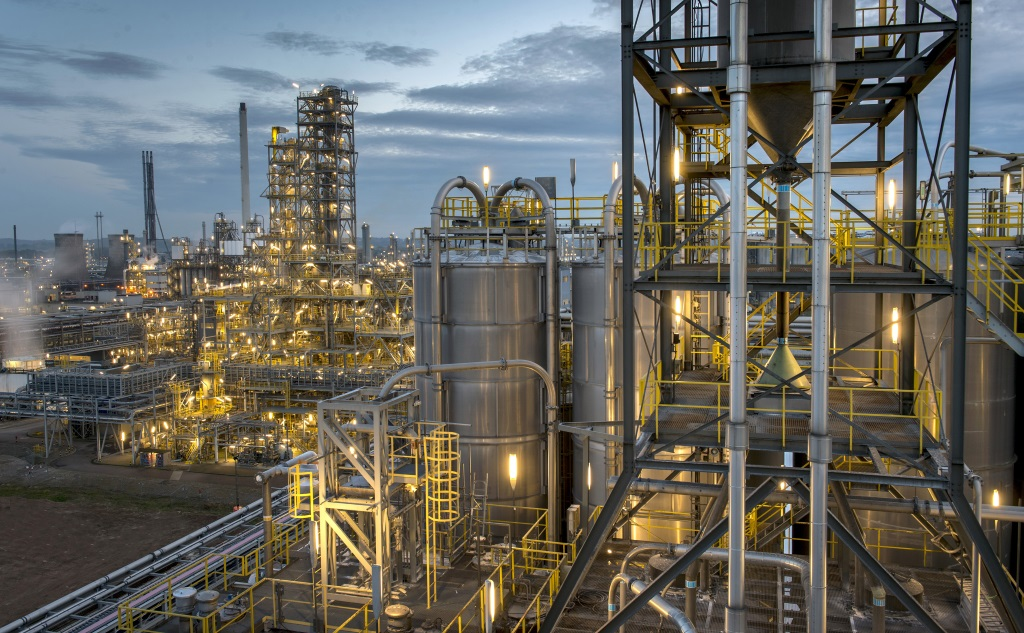
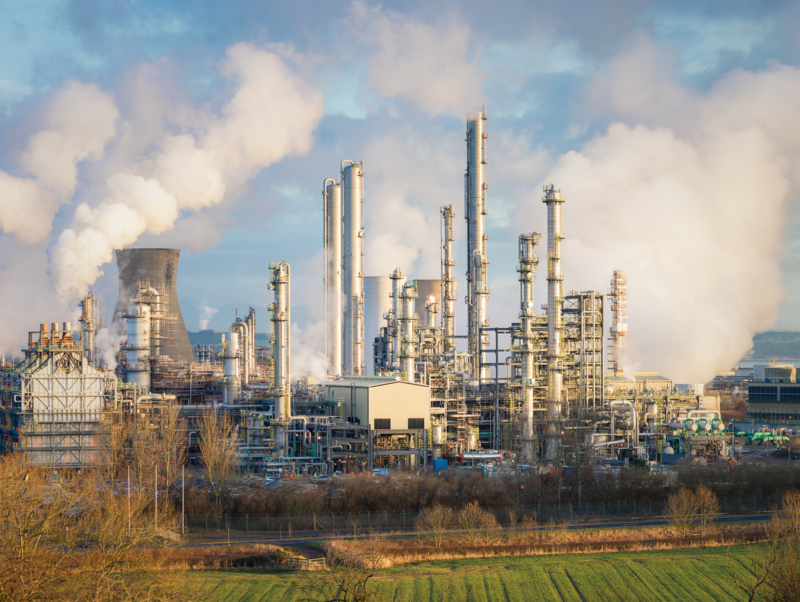
The closures of ExxonMobil Corp.’s steam cracker at Notre Dame de Gravenchon, France, and one of Sabic’s two crackers at Geleen, Netherlands, which were announced separately on April 10-11, are not expected to make big inroads into the huge ethylene and propylene overcapacity in Europe and worldwide, but the two moves are considered significant because they could be the first steps in the long-awaited rationalization of Europe’s olefins industry. Rationalization has been looming since China’s huge petrochemicals capacity overbuild, which started to accelerate in about 2020, collided with the economic disruption and slowdown caused by the COVID-19 pandemic and was exacerbated by Europe’s historically high energy and feedstock costs, made worse in the past two years by Russia’s war in Ukraine.Naphtha is the main feedstock for steam cracking in Europe and Asia, which puts these regions at a competitive disadvantage relative to regions that use predominantly ethane, such as the Middle East and US."The ethylene industry has overbuilt itself," said Tony Potter, global vice president/chemicals at S&P Global, in a recent presentation. "Naphtha cracker margins in Europe and Asia will be below reinvestment levels in 2024 and 2025."Unlike Asia, Europe lacks strong economic growth, with most European economies on the brink of recession, resulting in weak demand for petrochemicals and polymers.The ExxonMobil and Sabic closures will result in a combined 955,000 metric tons per year of ethylene capacity being eliminated. According to Michael Liesfeldt, director/olefins and derivatives, Middle East and Africa at S&P Global Commodity Insights, the announced closures account for only 4% of the total available ethylene capacity in Western Europe. France and the Netherlands will see a combined 14% reduction of capacity, which should be enough to move cracker utilization from current "low" rates to the mid-80s in percentage terms, he said.To move Western Europe up to an average 90% cracker utilization rate, another 1 million metric tons per year (MMt/y) of ethylene capacity would need to exit the market as of 2026, Liesfeldt said.However, Europe’s capacity crisis should not be viewed in isolation, because China’s buildup, which is on course to continue for the rest of this decade, necessitates a global perspective, said Walt Hart, executive director/olefins, Americas at S&P Global Commodity Insights. "The existing overcapacity problem will be exacerbated by the addition of around 23 million metric tons of new ethylene capacity in mainland China by 2030, which will mainly be comprised of naphtha crackers," Hart said. "Thus, while the capacity rationalization announced in Europe is certainly helpful, Europe cannot solve the global problem. A more rapid return to strong global ethylene margins would require contributions to capacity rationalization from other regions, as well as some new project cancellations."The outlook for ethylene in Europe is bleak. "World demand for ethylene derivatives is increasing, with Western Europe’s share declining," said Liesfeldt. "The fact is that the already high living standards and low population growth in Europe will limit overall [demand] growth, and recycled materials use will increase over time." Europe’s share of global ethylene derivatives demand dropped from 16.5% in 2010, to 9.9% in 2023, according to S&P Global.Multinationals such as ExxonMobil and Sabic are "playing the long game, rebalancing global sales and operations planning," Liesfeldt said. ExxonMobil could ship polymer volumes from its larger cost-advantaged facilities in the US to protect market share in Europe, he said. Sabic, meanwhile, can optimize its regional footprint and utilize more cost-effective olefin units such as the company’s 865,000 metric tons per year cracker at Wilton, UK, once the unit restarts after an extensive upgrade to cut CO2 emissions.Ineos Group Ltd., meanwhile, is building the first new cracker in Europe for 25 years at Antwerp, with capacity for 1.45 MMt/y of ethylene, which will be the largest olefins unit in Europe. The project is currently stalled because of a campaign by environmentalists, but Ineos has not changed the plant’s announced completion date of 2026.Liesfeldt noted that in the whole of Europe there are 51 crackers in operation. The average naphtha cracker size in the region is 500,000 metric tons per year, he said."Many old crackers have a relatively low capacity," Liesfeldt said. "The world scale was different 10-20 years ago." Ethane cracker world scale today is up to 2 MMt/y in the US and Middle East, and naphtha crackers are larger than 1.2 MMt/y, he said.Apart from older crackers, the ethylene plants that are most likely to close in Europe are "the crackers that are not heavily integrated, small sized and requiring future high reinvestments to meet new standards," Liesfeldt said. These plants "will see ongoing scrutiny, especially with the limited demand growth," he said.Much of Europe’s olefins industry is in clusters and/or integrated with refineries. "The integrated sites and assets are connected with ‘hardware’ such as pipelines, rail, road, waterways and ‘software’ such as commercial agreements for raw materials and finished products, swaps between partners, shared energy and utility contracts," Liesfeldt said. "This is all aimed at bringing down the total cost of the cluster."Some crackers in Europe, such as Ineos’ plants at Grangemouth, UK, and Rafnes, Norway, have switched to consuming ethane imported from the US, which has put them at a cost advantage relative to Europe’s many naphtha crackers. Other European crackers can consume liquefied petroleum gas, which makes them more competitive than naphtha crackers. "Imported ethane is the best option," Liesfeldt said. "Naphtha has the highest cost. If you have flexible crackers, you can move to imported ethane or the next best available feed." This article first appeared in chemweek.com
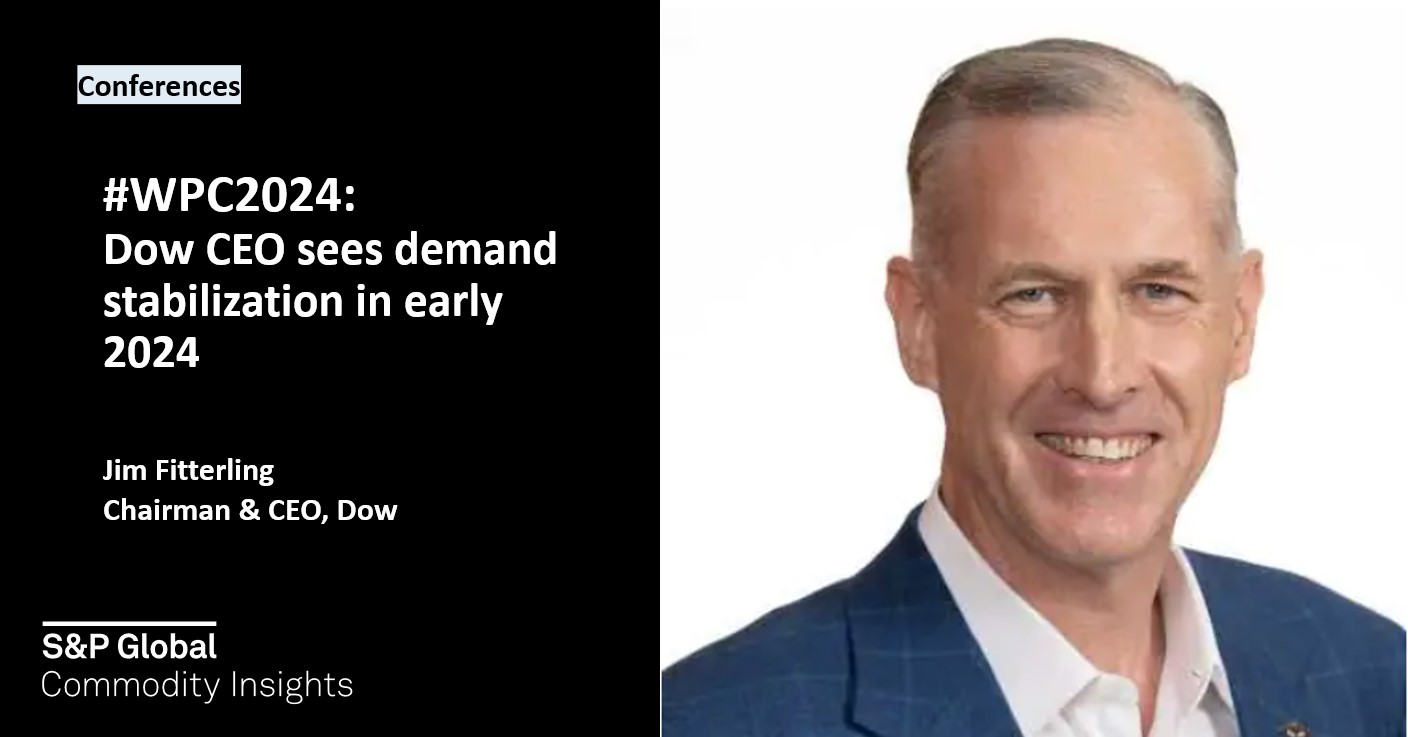
Chemical demand is stabilizing in early 2024, Dow Inc. chairman and CEO Jim Fitterling said at the World Petrochemical Conference by SP Global in Houston. Construction of Dow’s net-zero Alberta cracker will begin soon, and the company hopes to pursue similar net-zero ethylene investment in the US. WPC took place from March 18-22 and LIVE is your all-access pass to the conference. Check back for more chemical insights and cutting-edge coverage.
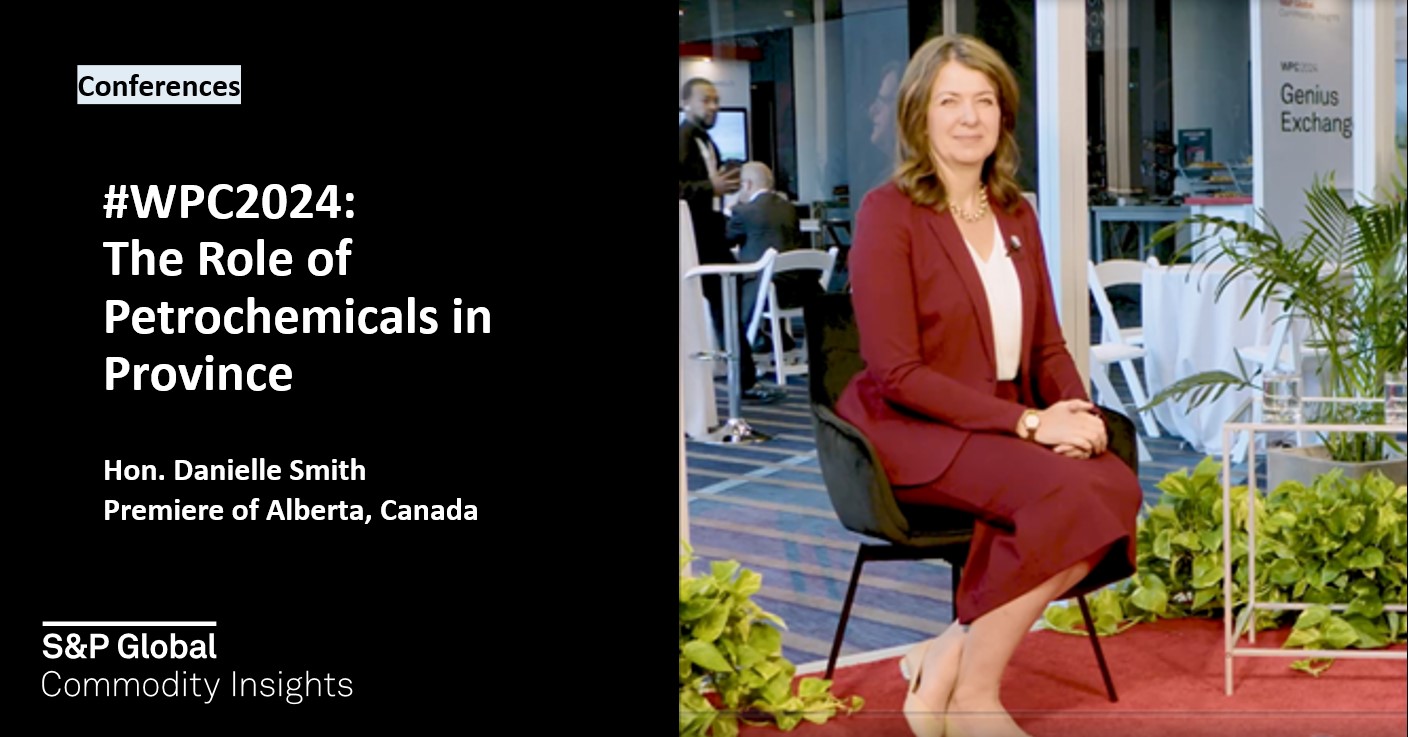
Alberta premier Danielle Smith highlights the critical role petrochemicals play in Alberta’s economy at the World Petrochemical Conference by SP Global in Houston. She highlighted the low-cost gas and feedstock advantage, available carbon capture infrastructure, and steps Alberta is taking to ensure hydrocarbons are upgraded to higher-value chemicals and derivatives in the province. WPC took place from March 18-22 and LIVE is your all-access pass to the conference. Check back for more chemical insights and cutting-edge coverage.
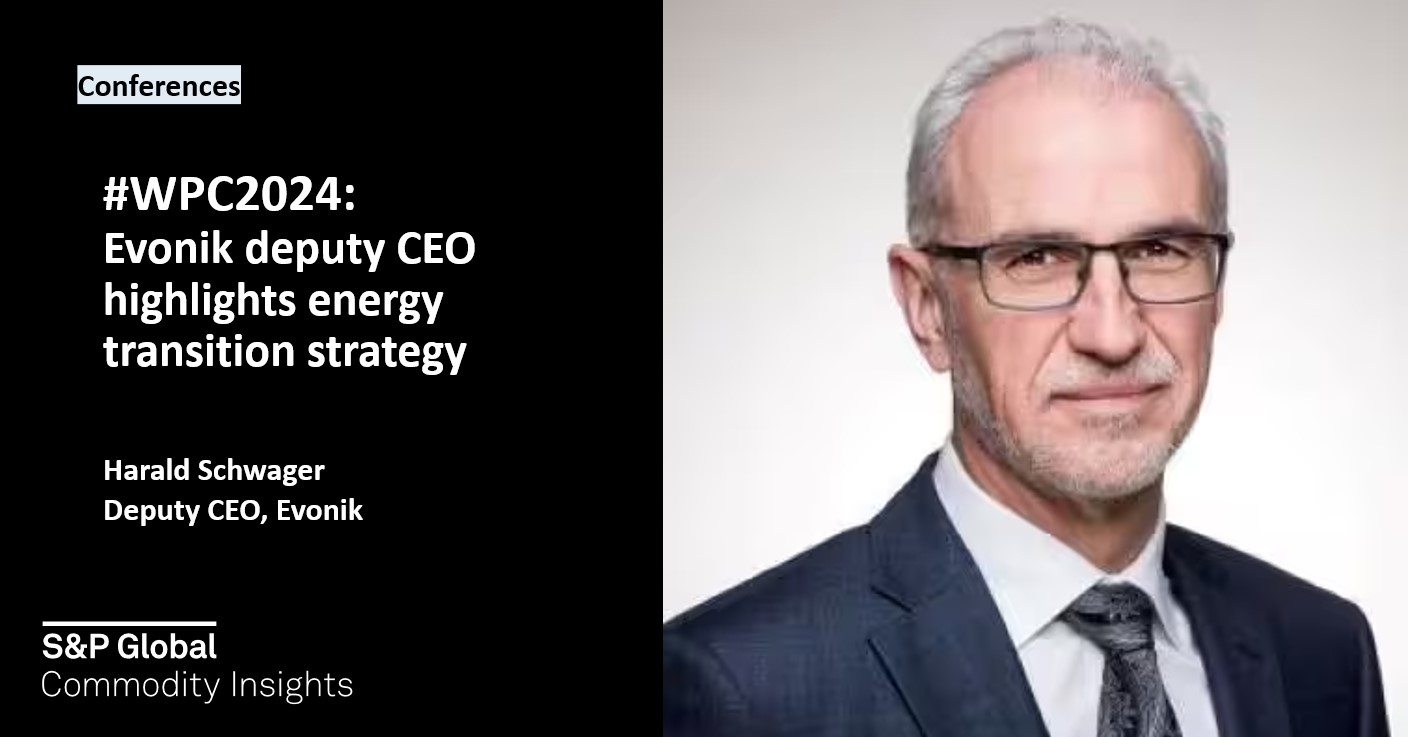
Evonik deputy CEO Harald Schwager said the company is seeing demand stabilize in its core markets at the World Petrochemical Conference by SP Global in Houston. Schwager also addressed the impact of energy transition on Evonik’s strategic direction, portfolio alignment with sustainability trends, and the need for Europe to accelerate renewable infrastructure investment to European competitiveness. WPC took place from March 18-22 and LIVE is your all-access pass to the conference. Check back for more chemical insights and cutting-edge coverage.
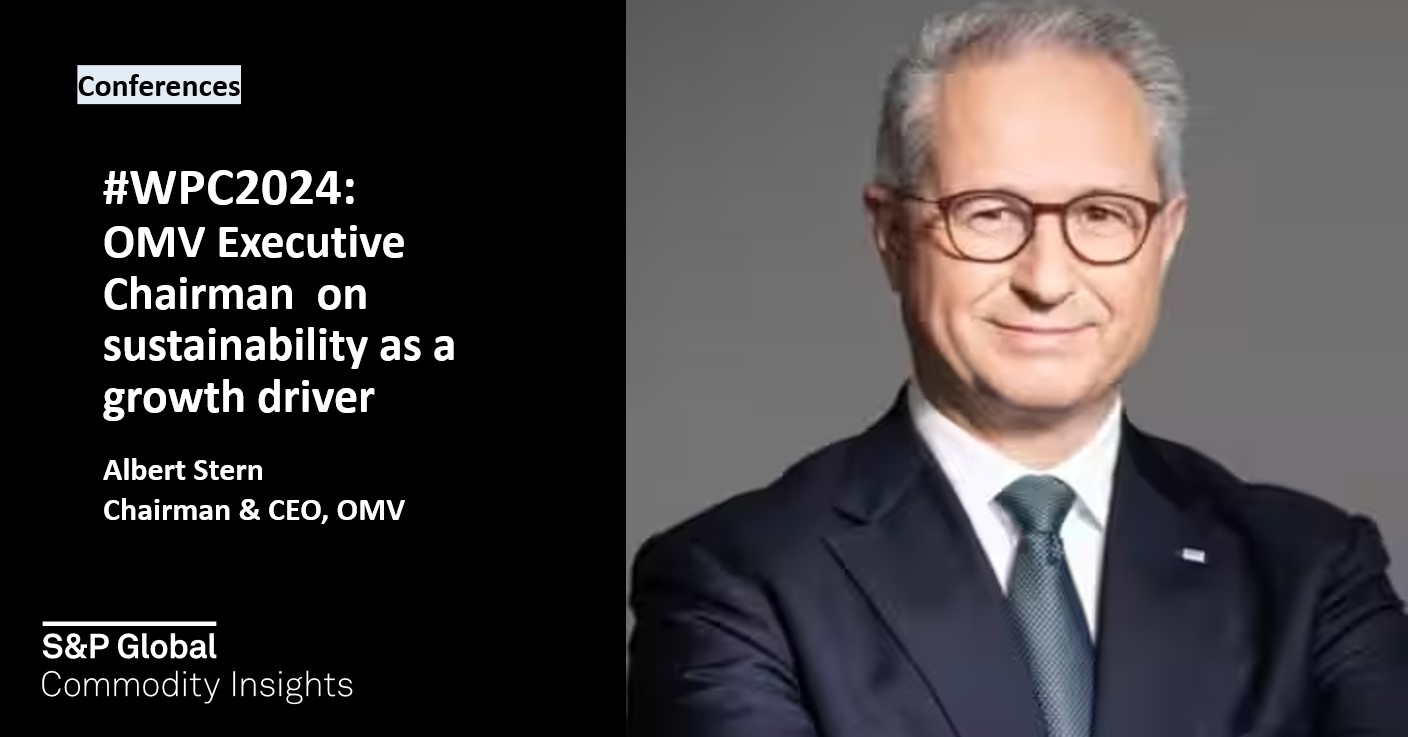
OMV chairman and CEO Albert Stern discusses early indications of a stronger demand environment for petrochemicals at the World Petrochemical Conference by SP Global in Houston. Stern also highlighted the opportunity that decarbonization and sustainability bring and how OMV is turning it into a growth driver. WPC took place from March 18-22 and LIVE is your all-access pass to the conference. Check back for more chemical insights and cutting-edge coverage.
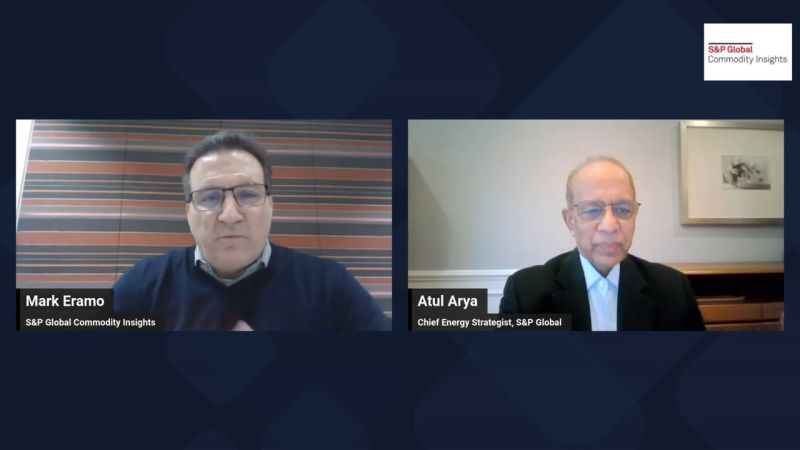
Take advantage of invaluable insights from our SP Global Commodity Insights experts, Mark Eramo and Atul Arya, as they unpack the key takeaways from #COP28 and #Davos2024! This video is a must-watch as it offers intriguing perspectives on all the pivotal themes we'll explore at the World Petrochemical Conference. Hear more from Mark and Atul at WPC2024, where they'll delve into crucial topics like Materials Transition. Secure your spot and interact with experts in the industry
MARCH | Houston, TX
Established in 1985, the World Petrochemical Conference is the premier assembly of industry leaders, global experts and government officials convening for thought-provoking dialogue and in-depth discussions around the major strategic issues facing all…