Europe’s ethylene rationalization begins, more closures needed
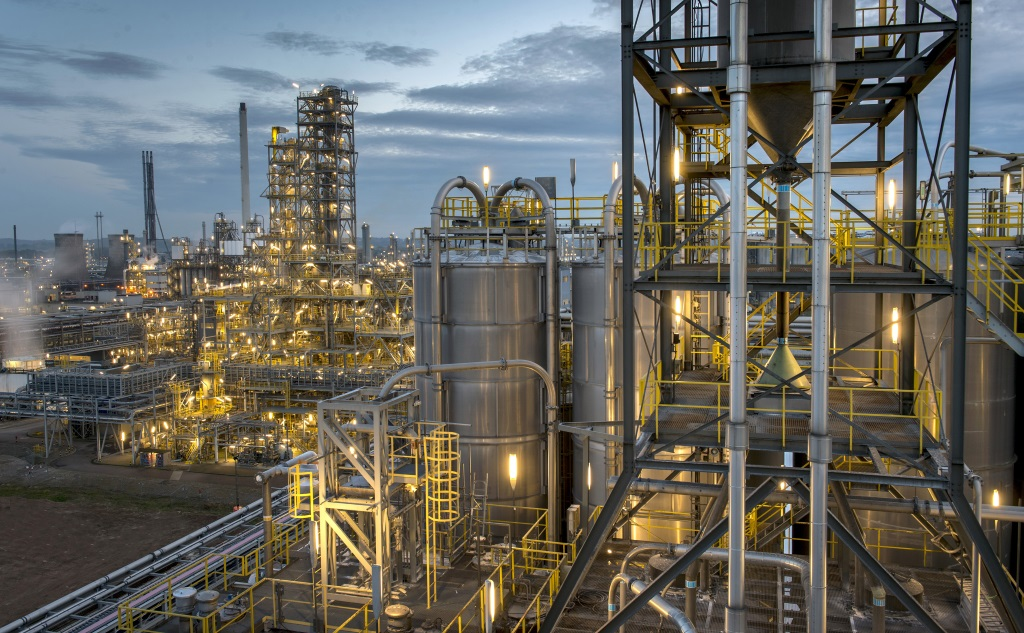
The closures of ExxonMobil Corp.’s steam cracker at Notre Dame de Gravenchon, France, and one of Sabic’s two crackers at Geleen, Netherlands, which were announced separately on April 10-11, are not expected to make big inroads into the huge ethylene and propylene overcapacity in Europe and worldwide, but the two moves are considered significant because they could be the first steps in the long-awaited rationalization of Europe’s olefins industry. Rationalization has been looming since China’s huge petrochemicals capacity overbuild, which started to accelerate in about 2020, collided with the economic disruption and slowdown caused by the COVID-19 pandemic and was exacerbated by Europe’s historically high energy and feedstock costs, made worse in the past two years by Russia’s war in Ukraine.
Naphtha is the main feedstock for steam cracking in Europe and Asia, which puts these regions at a competitive disadvantage relative to regions that use predominantly ethane, such as the Middle East and US.
"The ethylene industry has overbuilt itself," said Tony Potter, global vice president/chemicals at S&P Global, in a recent presentation. "Naphtha cracker margins in Europe and Asia will be below reinvestment levels in 2024 and 2025."
Unlike Asia, Europe lacks strong economic growth, with most European economies on the brink of recession, resulting in weak demand for petrochemicals and polymers.
The ExxonMobil and Sabic closures will result in a combined 955,000 metric tons per year of ethylene capacity being eliminated. According to Michael Liesfeldt, director/olefins and derivatives, Middle East and Africa at S&P Global Commodity Insights, the announced closures account for only 4% of the total available ethylene capacity in Western Europe. France and the Netherlands will see a combined 14% reduction of capacity, which should be enough to move cracker utilization from current "low" rates to the mid-80s in percentage terms, he said.
To move Western Europe up to an average 90% cracker utilization rate, another 1 million metric tons per year (MMt/y) of ethylene capacity would need to exit the market as of 2026, Liesfeldt said.
However, Europe’s capacity crisis should not be viewed in isolation, because China’s buildup, which is on course to continue for the rest of this decade, necessitates a global perspective, said Walt Hart, executive director/olefins, Americas at S&P Global Commodity Insights. "The existing overcapacity problem will be exacerbated by the addition of around 23 million metric tons of new ethylene capacity in mainland China by 2030, which will mainly be comprised of naphtha crackers," Hart said. "Thus, while the capacity rationalization announced in Europe is certainly helpful, Europe cannot solve the global problem. A more rapid return to strong global ethylene margins would require contributions to capacity rationalization from other regions, as well as some new project cancellations."
The outlook for ethylene in Europe is bleak. "World demand for ethylene derivatives is increasing, with Western Europe’s share declining," said Liesfeldt. "The fact is that the already high living standards and low population growth in Europe will limit overall [demand] growth, and recycled materials use will increase over time." Europe’s share of global ethylene derivatives demand dropped from 16.5% in 2010, to 9.9% in 2023, according to S&P Global.
Multinationals such as ExxonMobil and Sabic are "playing the long game, rebalancing global sales and operations planning," Liesfeldt said. ExxonMobil could ship polymer volumes from its larger cost-advantaged facilities in the US to protect market share in Europe, he said. Sabic, meanwhile, can optimize its regional footprint and utilize more cost-effective olefin units such as the company’s 865,000 metric tons per year cracker at Wilton, UK, once the unit restarts after an extensive upgrade to cut CO2 emissions.
Ineos Group Ltd., meanwhile, is building the first new cracker in Europe for 25 years at Antwerp, with capacity for 1.45 MMt/y of ethylene, which will be the largest olefins unit in Europe. The project is currently stalled because of a campaign by environmentalists, but Ineos has not changed the plant’s announced completion date of 2026.
Liesfeldt noted that in the whole of Europe there are 51 crackers in operation. The average naphtha cracker size in the region is 500,000 metric tons per year, he said.
"Many old crackers have a relatively low capacity," Liesfeldt said. "The world scale was different 10-20 years ago." Ethane cracker world scale today is up to 2 MMt/y in the US and Middle East, and naphtha crackers are larger than 1.2 MMt/y, he said.
Apart from older crackers, the ethylene plants that are most likely to close in Europe are "the crackers that are not heavily integrated, small sized and requiring future high reinvestments to meet new standards," Liesfeldt said. These plants "will see ongoing scrutiny, especially with the limited demand growth," he said.
Much of Europe’s olefins industry is in clusters and/or integrated with refineries. "The integrated sites and assets are connected with ‘hardware’ such as pipelines, rail, road, waterways and ‘software’ such as commercial agreements for raw materials and finished products, swaps between partners, shared energy and utility contracts," Liesfeldt said. "This is all aimed at bringing down the total cost of the cluster."
Some crackers in Europe, such as Ineos’ plants at Grangemouth, UK, and Rafnes, Norway, have switched to consuming ethane imported from the US, which has put them at a cost advantage relative to Europe’s many naphtha crackers. Other European crackers can consume liquefied petroleum gas, which makes them more competitive than naphtha crackers. "Imported ethane is the best option," Liesfeldt said. "Naphtha has the highest cost. If you have flexible crackers, you can move to imported ethane or the next best available feed."
This article first appeared in chemweek.com.